Thursday, May 22, 2014

Soaking up the Delights of Devon and Cornwall in sunny May


We took a jaunty four-day car trip, kicking off on Tuesday May 13th to delightful Devon and quaint Cornwall with my sister-in-law Christine visiting from Australia. We were blessed with the most glorious Goldilocks conditions (not too hot, not too cold) with dazzling blue skies and gentle sunshine and a crisp breeze (to combat any risk of overheating us mature-aged ladies!) Who says England does not have beautiful weather?

First stop was Stonehenge in Wiltshire. The ancient monument is classed as one of the wonders of the world and the English Heritage has just completed an impressive new Visitor Centre and audio tour that we were lucky enough to experience crowd-free mid-week.

With Andrew at the wheel we drove on to the charming fishing village of Ilfracombe that sits right on the cliff facing the Atlantic Ocean. We were stunned to see the new addition of Verity, a dramatic 66-foot bronze statue of a beautiful pregnant woman representing truth and justice, created by sculptor Damien Hirst. She is simply breathtaking and inspiring!

That night we stayed at The Towers with charming and friendly hostess Tricia, which really added to the pleasure of our stay. I totally recommend this charming guesthouse with such lovely décor and mesmerising views overlooking the ocean.

Tricia suggested we call in on the delightful village of Boscastle near Bude for Devonshire tea, which was an excellent idea as the indulgent morning tea/early lunch was yummy and we wandered along the tinkling stream that flows through the historic shops and homes.

We drove to the enchanting Port Isaac, made extra special by being the setting for the popular BBC series Doc Martin. As we are all keen fans of endearing show we were thrilled to walk the narrow cobblestone streets of the village and see the Doc’s cottage, the familiar harbour and climb the grassy cliffs to capture the magnificent coastal views and swirl in Julie Andrews-style singing a hearty rendition of the Sound of Music under the vivid blue skies!

That night we dined at the sumptuous Camelot Castle  in Tintagel, the birthplace of King Arthur, and we were unexpectedly entertained by a couple from Liverpool at the nearby table. Amateur comedian Ross regaled us with stories of his travels and celebrity encounters and we laughed until our full tummies ached!


Our final destination was the captivating Cornish coastal village of St Ives, where Andrew and Christine’s mother spent many happy childhood holidays. It was a nostalgic and emotional visit for them seeing where their mum played as a child on the sandy beach, the colourful fishing boats and lazy pier, the cobblestone streets and pretty shops and cafes, still buzzing with seaside visitors.The Wallen family would ride the train from Crewe in Cheshire for some fun in the sun in the 1930s.

We stayed at the grand Treloyhan Manor Hotel set amid tranquil gardens and a short drive to bustling St Ives. I confess we indulged in chunky Cornish pasties on the beach!

That evening we took glorious sunset photos of the harbour and as a special treat for me we ate at the superb gourmet vegetarian restaurant, Spinacios. Even the meat-eaters agreed that the super healthy plant-based meals were divinely delicious! Even so, Andrew insisted
on an after-dinner ice cream cone and a cheeky seagull swooped over his shoulder knocked the glob of icecream to the ground and swallowed it in one gulp!

Andrew was keen to head straight for home on Friday so we drove seven hours straight, with a brief stop for lunch at Stonehenge, back to Ashford Kent in time to pick up Honey from the kennels. And a jolly good trip it was!

Wednesday, April 30, 2014

The Paths of Remembrance Evoke Powerful Emotions


I joined a group of writers for a weekend tour in Nord and Pas de Calais in Northern France to commemorate the start of the First World War 
We toured historical sites from Friday April 25th to Sunday 27th, 2014. Visitors from around the world can share the commemoration of WW1 in France from 2014 to 2018.
 Here is the feature I wrote for 
50 Connect


The misery and insanity of war can seem like an inaccessible, nebulous thunder cloud of black statistics until you focus on one specific reckless battle and the poignancy of the personal perspective of a sensitive young soldier from Shropshire.


Wilfred Owen, just 25, felt safe and secure holed up with other officers of the Second Manchesters Regiment in the smoky, rowdy cellar of a cottage in the tranquil French village of Ors when he scrawled an eloquent letter to his fretful mother, dated October 31, 1918.

Usually maudlin, this cheerful letter was full of joy and comfort as the horror of war was coming to end and the men were dreaming of home.

Owen writes: “It is a great life. I am more oblivious than alas yourself, dearest Mother, of the ghastly glimmering of the guns outside and the hollow crashing of the shells. There is no danger down here, or if any, it will be well over before you read these lines. I hope you are as warm as I am; as serene in your room as I am here…you could not be visited by a band of friends half so fine as surround me here.”

But four days later the gifted young poet and forty other youthful English soldiers were dead, tragically, needlessly, just a week before the Allies’ Victory on Armistice on November 11. 

Soldiers must obey dumb decisions by commanding officers. When ordered to construct a floating bridge and cross the Sambre-Oise Canal, the soldiers were hopelessly exposed to the German units entrenched on the opposite bank at La Motte Farm, who opened fire with machine guns. Amongst the fatal causalities was Wilfred Owen. 

Here we are, almost one hundred years later, a group of seven curious British travellers, dangling mobile phones, cameras and gadgets, standing mesmerised and teary, in that same cellar listening to the resonant voice of acclaimed actor Kenneth Branagh reading Owen's last letter. His innocent words land like bricks on the heart.

We are transported back a century and emotions are raw. Our minds are racing with images of terrifying battle scenes and courageous young men living their last moments with gusto, before sacrificing their futures for unborn generations. That’s us; the grateful living.

The jolly little rural cottage was red brick with jaunty window shutters when Owen sheltered in the smoky cellar but these days the memorial is stark white with a dramatic curved ramp leading to a modern museum with illuminated clear walls adorned with the hand written lines of Owen’s evocative war poetry. And there’s that aching audio again turning eyes wet with tears. 

Our little tour group of whimsical writers led by Sara from PR agency, four bgb and Ellie from MYFERRYLINK crossed the English Channel to Calais in style and comfort on Friday afternoon and drove in two cars to the Hotel d' Angleterre in Arras, a charming, resilient city lovingly rebuilt after being severely bombed in both wars. 

My spacious, elegant suite with a giant, comfortable bed ensured I woke up fresh and eager to walk in the footsteps of Wilfred Owen, one of the Remembrance Trails of Northern France, created for the Centenary of the start of the First World War in 1914.

After our emotional experience in the La Maison Forestiere, the kindly Mayor of Ors, Jacques Duminy, devoted to promoting the unique memorial, accompanies us on the seven-kilometre hike through pretty woodlands to take in the languid canal where the tragic battle was fought.

We stroll through the village where the soldiers, including Scotsmen in kilts, Aussies in slouch hats and Indians in turbans, fraternised with locals. We visit the simple graveyard where over a hundred Allied soldiers are buried and the local cemetery where Owen’s modest headstone is one of many.

The easy trails weave through idyllic woodlands of skinny trees knee-deep in carpets of bluebells; their branches shimmering with delicate new leaves in crisp air filled with birdsong. In this peaceful sanctuary, we contemplate the aberration of war’s chaos and destruction. The Wilfred Owen walk has transformed us all into poets!

With a stinging blister on my toe and rumbling tummy, I hobble off to join our group for a hearty lunch of traditional dishes in the rustic cafe, l’Estaminet de l’Hermitage in Ors.

And then we change gears into art connoisseurs to visit Louvre-Lens museum, a modern regional art gallery with an astonishing collection of antiquities, a regional annex of Paris’ famous Louvre.

A fascinating day is capped off with a superb, delectable dinner and much lively discussion and laughter at La Faisanderie, a Baroque-style restaurant set in a brick-walled cellar in elegant Arras. 

If immersion in the pathos of Wilfred Owen was a profound experience, I am completely taken by surprise on Sunday morning. Nothing could have prepared me for the emotional impact of what came next!

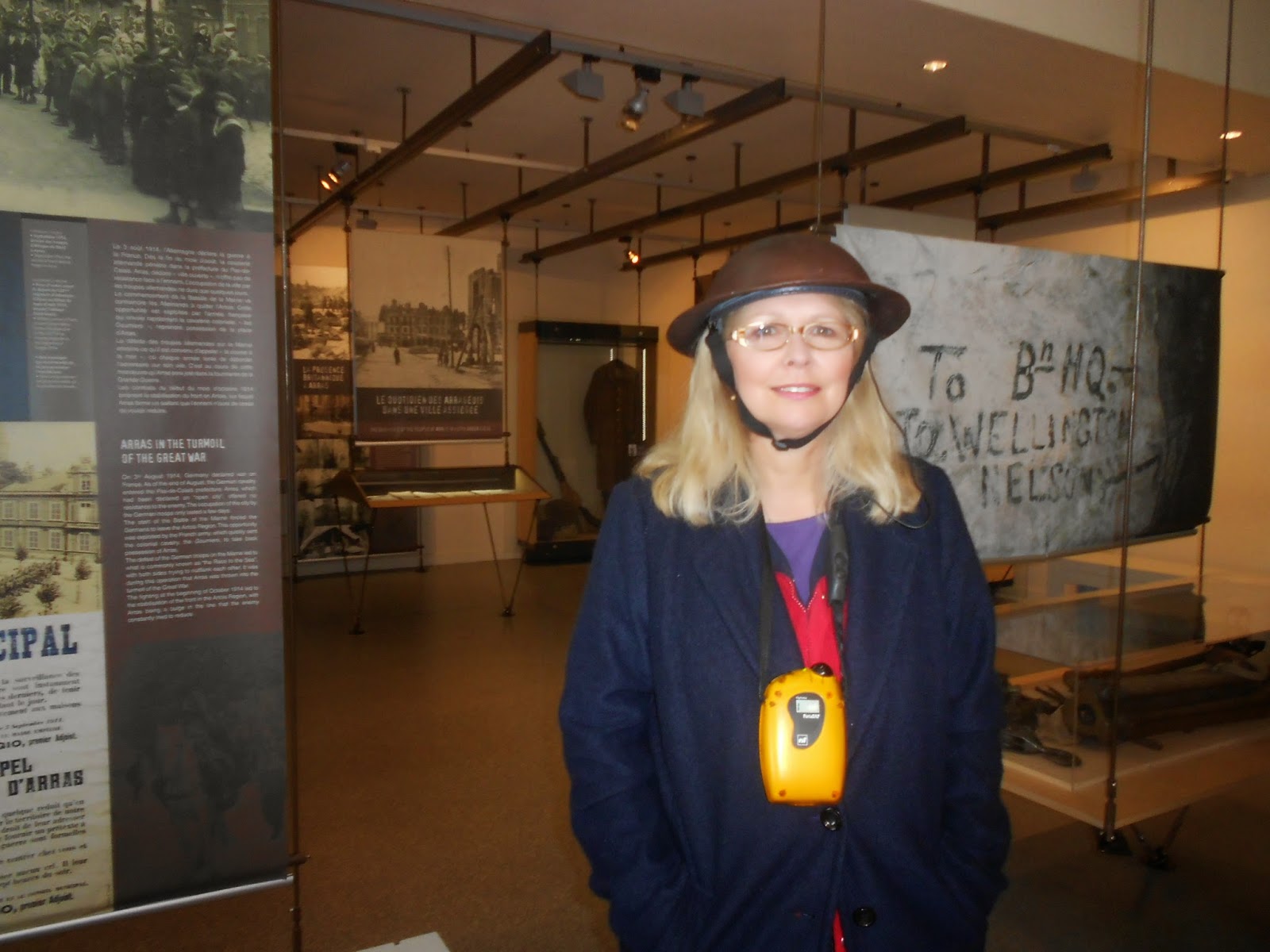
At the Wellington Quarry we slap on audio headsets and safety helmets and, led by our knowledgeable guide Francois, descend 20 meters to a secret underground city.

In the winter of 1916, work gangs of 500 determined and courageous New Zealand Tunnellers, using only picks powered by muscle, sweat and hard labour, dug out 12 miles of tunnels over six months. These tunnels, cut through chalky stone, are not tiny rabbit warrens but cavernous corridors and rooms that housed 24,000 Allied soldiers from all over the world for eight days before the most surprising attack of the First World War.

At Exit 10, the Tommies, multitudes of brave young men suppressing their terror, emerged from this secret underground base to burst into No Man’s Land a few meters from the German camps in the morning of April 9, 1917 to fight and win the famous Battle of Arras; a mass slaughter. Over two gory months, 4000 men lost their lives every day. The hard-won victory stopped the German troops advancing into France.

Visitors are enthralled to watch black and white films of life underground and hear the
accented voices of soldiers as they bantered, trying to preserve humour and optimism, normality and dignity, living off canned ‘monkey meat’, smoking pipes, playing cards, taking turns at icy showers and shaving their whiskers, lining up for stinking latrines and sleeping huddled with army rugs in timber bunks set into freezing stone walls.

With our imaginations in over-drive visualising this heroic super human mission, my fellow travellers and I are gob smacked and intrigued by Francois’ vivid descriptions as we weave through the eerie, illuminated labyrinth. The sombre mood is lightened by colourful displays of provisions, graffiti and funny drawings and the nostalgic mixture of Kiwi and English place names the tunnellers and soldiers gave the myriad chambers to conjure the comforts of home.

Feeling emotionally and mentally drained, I’m not sure if I can take much more of this historic heartache. But there’s more. We meet up with two charming young women from the Tourism Office Notre Dame de Lorette Church at Artois.

The impressive memorial commemorates the Battle of Lorette that lasted 12 months and claimed 100,000 victims. The imposing Lantern Tower, erected in 1921, is 150 feet high and at night it’s beacon-light revolves five time every minute across the surrounding countryside.

The Chapel is a massive, stark building from the outside but inside the Romanesque and Byzantine decor is awe-inspring; full of grace and beauty, with immense mosaic images and vivid stained glass windows.

Surrounding the two impressive buildings, the French National War Cemetery contains the bones of over 40,000 soldiers, marked by dramatic rows of white crosses.

Luckily a delicious lunch at the convivial, rustic Estaminet de Lorette provides respite from the daunting vision of graveyards. My blueberry tart is heavenly!

By mid afternoon the weather is turning bleak with a cold blanket of grey haze and drizzle providing the perfect atmosphere to visit Vimy Ridge to experience life in the trenches during the bitter winter of 1917 where all four Canadian divisions, fighting together for the first time, stormed the seven kilometre long Ridge, a strategic German stronghold.

The victory came at the enormous cost of over 10,000 casualties including 3,598 Canadians,
whom are remembered amongst the 66,000 Canadians who died in the First World War at the Vimy Ridge National Historic Site of Canada. The astonishing Monument of twin white pylons is carved with thousands of names of brave soldiers.      
      
Our weekend tour packed in so much and opened my eyes and heart to my grandfather’s courageous generation who sacrificed their lives for freedom.

Wearily we pile in our cars and drive to Calais port for the pleasant return trip across the Channel, chatting about our impressions and insights and somehow feeling older and wiser.

I recommend the World War tours in Northern France to humans of all ages in the hope that enough empathy and compassion for the brave victims of war and the loss and grief suffered by millions of parents, siblings, sweethearts, wives and children will lead to a passionate commitment to a love of humanity and peaceful co-existence.   


- Fact box – 

MyFerryLink
MyFerryLink operates 16 daily crossings on the Dover-Calais route. Fares for a car and up to four passengers start from just £36 each way online for any duration travel and from £29 return for a day trip. To find the best fares, visit www.myferrylink.com or call 0844 2482 100 

Nord-Pas de Calais Tourist Board

For more information on the Nord-Pas de Calais, visit  www.northernfrance-tourism.com


Wilfred Owen / Maison Forestière in Ors
Entry to the house is free of charge. Open Monday to Saturday (except Tuesdays) from 10am to 1pm, and 2-5pm. Also open the first Sunday of every month from 2-5pm.
For more information on the Maison Forestière in Ors, and to download the Wilfred Owen trail, visit www.tourisme-cambresis.fr/following-owen

Louvre Lens
Entry to the Galerie du Temps is free. Other exhibitions may be payable.
A new temporary exhibition dedicated to the ‘Disasters of War’ will take place from 28 May – 6 October 2014 and costs €3.

Wellington Quarry
La Carrière Wellington runs regular guided visits daily for €6.80 per adult and €3.10 per child. To buy tickets, visit http://explorearras.getaticket.com/

Vimy Ridge and Notre Dame de Lorette Necropolis
Entry to all sites are free of charge, and Canadian volunteers will act as a guide to Vimy Ridge free of charge. For information on these and other war sites in the Nord-Pas de Calais area, visit www.remembrancetrails-northernfrance.com

Another good site is www.arras1418.com

War history enthusiasts and techie people will be thrilled with the new Diaries 14-18 app (http://www.zevisit.com/application/war1418/diaries1418.html)


Hôtel d’Angleterre

We stayed at the Hôtel d’Angleterre. A double room starts from €104 per night on a bed and breakfast basis. www.hotelangleterre.info

La Faisanderie
On the Saturday night, we ate at La Faisanderie in Arras.

Estaminet de Lorette
On Sunday lunchtime, we ate at the Estaminet de Lorette


Tuesday, July 23, 2013

Falling in love with Lakes and Mountains on a Swiss Summer Adventure


Here we are, a mixed bunch of British journalists, five of us seasoned travellers aged over 50 with a bottomless supply of well-honed travel tales to trade and two enthusiastic, bright young women in their 20s, savvy with languages and online smarts. We flew out of UK airports on effortless one-hour Swiss flights followed by an easy two-hour train ride from Zurich on our Swiss Flexi Passes to Luzern, the heartland of glorious Switzerland, all set for a carefully designed five day tour organised by Thomson Lakes and Mountains.  

Our mission is to experience the picturesque lake and mountain region in the gentle summer months, when the majestic mountains are lush and verdant and dotted with bell-clanging cows. The locals joke with the tourists: “Why do Swiss cows wear bells? Because they haven’t got horns!” 

The destination, famous for winter skiing when the snow-draped peaks are over-run with neon-clad skiers, is now transformed to a lake-centric playground in mid-July. Summertime and the living is easy.

Lake Lucern is 38 kilometers long, 250 meters deep in parts and the fifth largest lake in Switzerland. Tiny Switzerland with a population of eight million and landmass of just 350 kms by 220 kms is landlocked by Germany to the north, Austria to the east, France to the west and Italy to the south, cradled lovingly by mountains and laced with tranquil lakes that feed the human psyche’s need for reassuring views of water.

After a pleasant night at Hotel Waldstatterhof, it’s Wednesday and Day One of sightseeing with the focus on nature’s spectacular beauty. If the metaphor for Lake Lucern is a jewel, in summer this precious stone is jade. The opaque milky green depths are so mesmerising, so still and serene the throng of tourists on board the sturdy paddle steamer with the captain aloft on his trusty perch, exude a sense that all is well with the world as we chug along absorbing the panorama of all-encompassing, snow-capped mountains and quaint villages that dot the shoreline.

We are blessed with perfect weather, although when we dock at Vitznau and take the dainty cogwheel train up to Mount Rigi, the cloud cover obscures views of the mountains but we don’t mind because lunch draws us inside to the Restaurant Hotel Rigi-Kulm. After an appetising main meal we discover that the child-like joy of delicate Swiss icecream!

And then, another Swiss custom, not exactly an action sport, but a sedate activity ideal for older travellers; an exquisite float in the warm baths of the Mineralbad & Spa Rigi Kaltbad. Us girls don our swimsuits and enter the gentle embrace of the clear water and wade around trying the different massaging jets and then glide outside to sit in the soothing pool on top of the world gazing at the surrounding mountains; a sneak preview of Heaven! 
Feeling refreshed we head down the mountain in our bright red cogwheel train, enjoying the ineffable scenery, and then another jaunty boat ride in the breeze.

Dragging our luggage through the busy streets we move to the Ambassador and are warmly welcomed by hotelier Ferdinand who also runs the superb Lapin restaurant where that evening we devour gourmet delights. The master chef is happy to oblige with a special vegetarian meal for me, and exquisite seafood for my fellow diners and a sampling of unique local wines.

Almost Missed the Boat

Well maybe it was the wine that muddled my brain because before bed I put away my watch in my jewelry bag in the bathroom and next morning I’m relying on my iphone, which is still on UK time, one hour behind! So when I waft downstairs for breakfast the rest of the group is ready to set off! Startled by my mistake I quickly attack the buffet and taking my last swig of coffee, I watch in dismay through the window as my group vanishes around the corner. Young Jennifer, our tour leader, comes to my rescue and we charge off after them. But when we reach the bridge I look across at the waiting boat and realise with a groan I’ve forgotten my ticket, neatly tucked away in my suitcase!

Now only recently I started jogging classes at the fitness club back home in Kent so Jennifer and I sprint through the crowded streets back to the hotel. I grab my ticket and we sprint to the boat and jump aboard just as it’s pulling out! We literally almost missed the boat by seconds! With my heart thumping and struggling to breathe, we give each other a high five. So this is my own little taste of ‘extreme’ sports. My jogging coach will be so proud!       

After the drama, our intrepid group settles in for the cheerful cruise to Bechenreid. There’s only one way up the mountain to Klewenalp; in a cableway capsule, pressed close and cosy like commuters in the London Tube.

To my delight we meet impressive young Australian woman Rachel who speaks fluent German in her role as Communications Manager with Ricola. As fellow Aussies we swap stories about ‘back home’ before Rachel gives us an informative talk about the company that makes herbal drops for the world! We see sample garden beds of the 13 herbs that go into their natural products and learn that around 100 mountain farmers grow the organic herbs for Ricola in a generational business that has flourished for 80 years.


At the friendly restaurant on Klewenalp, we are treated to a hearty traditional lunch of cheesy macaroni with potato, topped with fried onions and served with apple sauce! It’s a Swiss favourite on freezing days when your body needs a carb load to beat the cold! Luckily I’m wearing stretchy pants! And of course this mountain of mountain food is followed by a massive serve of chocolate, caramel and hazelnut ice cream! Bang goes the diet! 

We all loosen our belts on the boat ride back to our hotel and freshen up before our next attraction, a leisurely tour of Lucern.


Enchanting Lucern


On this balmy afternoon with the soft sun setting across the glistening lake and a soothingbreeze caressing my bare arms, I am discovering the delights of this historical city, as our little group strolls around the cobbled streets with our charming Swiss guide Hanny, whose clear blue eyes and cheerful smile exude pride in her pristine city.  “Yes the citizens of Lucern are very happy!” she chimes, as we pause to enjoy an orchestral concert in full swing. What’s not to love about an idyllic collision of rich culture, natural beauty and a high standard of living!

Camera-snapping, ice cream-slurping tourists jostle with masses of regal white swans waddling on the water’s edge. Migrating from across Europe, they too are visiting Lucern for the summer!

Hanny, representing Lucern Tourism with true finesse, shows us the modern Culture and Convention Centre built over water channels and a dramatic fountain, one of 225 that grace the elegant city. The harbour is alive with the hustle and bustle of colourful boats, docking to unleash swarms of sun-kissed sightseers.

Historic buildings along the river form a bold skyline as we head towards the imposing 14th century Wasserturn Water Tower and the renowned chapel bridge adorned with flower baskets. 

We visit the exquisite Jesuit church, built in the 16th century in the Baroque style as a tribute to St Xavier. The towering painted timber panels look like peachy marble. The wistful ceiling paintings and ornate columns are awe-inspiring.
As we wander around the magical Old City with fresco-painted buildings, we become aware that Lucern is not your usual stressful, frenetic, traffic-dodging urban jungle. The quiet streets are free of cars. Relaxed pedestrians stroll and cyclists zip along amongst horse-drawn carriages.

Hanny tells us this German-speaking city is also a thriving hub of traditional festivals, concerts, museums and art galleries that draw culture-lovers like bees to a honey pot.

That evening we dine alfresco in a leafy garden restaurant, eating loads of salad (to balance our macaroni lunch) as we soak up the atmosphere of lovely Lucern. 

Interlopers in Interlaken

Come Friday it’s time to leave Lucern and take a smooth and efficient Golden Pass Panoramic train journey to Interlaken, a township sandwiched between Lake Thun and Lake Brienz at the foot of Mount Eiger, Monch and famous Jungfrau, the tallest peak in the Bernese Alps.

We meet our knowledgeable guide Martin in the foyer of Hotel Interlaken and check in. Wow! I have a spacious luxurious room! Dragging myself away from the enticing sofa, I join the group to set out in the late afternoon.

Martin knows the region like the back of his hand and leads us through the cosmopolitan town, a mecca for thrill-seekers. Gazing skyward we spot dozens of floating figures of intrepid para-gliders. How about bungee jumping, rock climbing, white water rafting?

Here in Interlaken, all levels of fitness and ages are catered for with a range of activities to suit everyone from adrenalin junkies who leap off mountains and drift on air currents suspended by archs of flimsy fabric to plodding tourists like me, whose tastes are more earthbound!

At Hardenbahn station we pile in the funicular, along with loads of excited parents and
children, and glide up to the lookout at the summit of Harder Kulm. The lofty vantage point gives us magnificent views, a vibrant palette of lakes and valleys and the majestic Jungfrau massif, making picture-postcard memories.

Tourists can forget about cars because in central Switzerland the favoured modes of transport include a range of fascinating boats, cheerful old-style and sleek, modern trains and cable cars and funiculars that propel curious humans up and down the steep slopes.

That evening we meet lovely young Meret from Interlaken Tourism who joins us for a gourmet dinner at Hotel Interlaken and we learn about her charmed life in this picturesque paradise. Meret has designed our intriguing itinerary for the next two days so it’s wise to retire early to be fresh for the action!

For something really unusual, Martin takes us to the Jobin woodcarving workshop in Brienz and Flavius, the owner of the family business dating back to 1835, leads a tour of the beautiful sculptures and exquisite Swiss handicrafts. The detailed works of animals, human forms and historic figures are truly captivating.

As an added treat, Flavius has laid out a workbench with little wooden cows for us to paint! Now I haven’t done anything remotely crafty since embarrassing flops in the high school art room so I was a little daunted. But I quickly become engrossed in the hands-on experience along with my fellow journalists who also throw inhibitions to the wind and paint up a storm! 

Clutching our little hand-painted cows we stroll around the idyllic lake surrounded by opulent chalets and watch real artists at work wielding chainsaws on life-size wooded sculptures. 

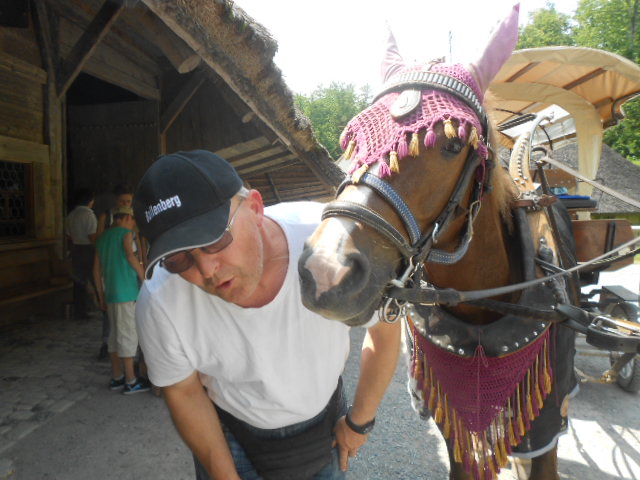
Taking a bus, we travel to the next attraction, the Ballenberg Open-air Museum, which draws visitors from across Switzerland and Europe and far-flung countries to see 250 native animals and more than 100 centuries-old buildings and gardens set on 163 acres.

After another scrumptious Swiss lunch of massive proportions, our host Dario takes us for an enchanting horse-drawn carriage ride taking us back in time. Our driver Evan clearly adores his horses as he gives them affectionate kisses on the snout!

We stop at the homemade chocolate shop; a perfect opportunity to buy gifts to take home! Swiss chocolate is as smooth as silk and as irresistible as Swiss ice cream and cheese made from the contented cows that graze the alpine meadows. 

A nostalgic funicular takes us up the ferny mountain to Giessbach to view the gushing Three Waterfalls and onward to the elegant Grandhotel Giessbach where our host shows us through the opulent dining rooms with heavenly views. Unsurprisingly this stunning mountaintop venue is a popular choice for lavish weddings.

Some of the more hardy members of our group opt for a strenuous hike while the rest, including me, return down the mountain in the funicular followed by a restful boat trip to rendezvous at the outdoor Restaurant De Luc, specialising of course in the freshest fish for my companions and a generous serve of veggies for me!  A brass band assembles at the lake’s edge and strikes up a rousing medley entertaining the throng of revellers!

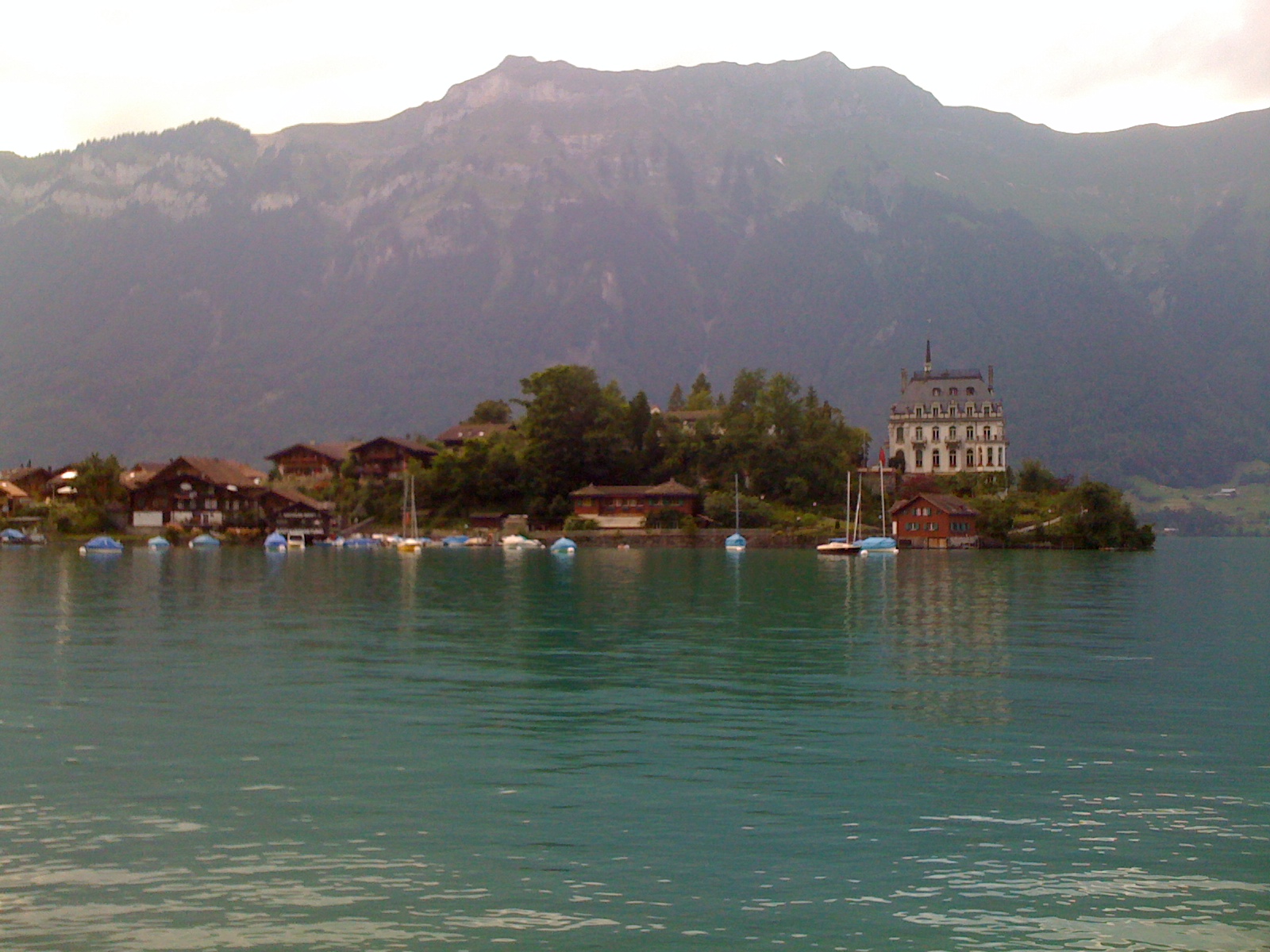
What an amazing day, jam-packed full of wonders and delights! We wander through the peaceful fishing village of Iseltwald to catch a bus to our hotel and collapse into sweet dreams. 


On the final morning of our glorious visit, Martin takes us skyward in the prettiest red cogwheel railway train to Schynige Platte to view the Alpine Gardens with 600 species of native plants and gaze across the glorious Swiss Alps. I am humming the tune to Edelweiss and tempted to burst into The Hills Are Alive With the Sound of Music and dance like Julie Andrews across the lush mountaintops. These giddy scenes set your heart racing with sheer exhilaration and you know you have experienced something truly magical. 
  

For more photos see my facebook album Switzerland Summertime Delights!


Thomson Lakes (www.thomsonlakes.co.uk; 0871 230 8181) offers 7 nights half board at the 3* Hotel de la Paix in Lucerne from £889 per person. Price includes flights from Heathrow to Zurich and train transfers. Regional airports are available at a supplement from £20 (Birmingham) and £40 (Manchester).

A week’s half board at the 4* Hotel Interlaken costs from £725 per person.

For more information on Switzerland, please visit www.myswitzerland.com and www.swiss.com

Lucerne – www.luzern.com
Interlaken – www.interlakentourism.ch

Tuesday, January 1, 2013

A Bucket Full of Dreams


The year 2013 offers a wide, open vista of possibilities. At this fresh new beginning of another year, take out your pen and write your Bucket List.
What’s a ‘bucket list’? And why is it so important to tick the boxes?


I was only in my mid-30s when he said it. But I remember the comment now, 20 years later. My old friend Jim was vibrant and brimming with fun and outlandish schemes in his mid-60s when he made the emphatic statement: “It’s a crime to go a whole lifetime and not travel and see this world, this beautiful planet, we are born on.”

Jim’s statement struck a chord because I felt the same restless yearning, almost a moral obligation, to travel and at that hectic stage of my life, as a mother raising young children and carving out a career and community service, I was rooted to my home in Australia and travelling the world was an impossible dream.

But I have always treasured the advice of my English friend Jim, who had left home at 15, faked his age and joined the navy to see the world, and later became a dynamic promoter bringing the famous stars of the 60s and 70s to culture-starved Australia, and died a very happy man after a full, exciting life of adventure, passionate love for his wife and family and significant contribution to society.

Yes travel is one ingredient in a fulfilled life. The desire to explore Planet Earth is instinctive and runs deep in the human psyche. In fact extensive new UK research confirms it. 

Research from funeral director CPJ Field & Co, commissioned to identify the life ambitions of Britain’s population, reveals that 20 million (42 per cent) people have either already prepared their Bucket List or are planning to write one. 

A ‘Bucket List’ is an idiom for the list of things you would like to achieve or dream of doing before you die, that is ‘kick the bucket’.

Topping Britain’s Bucket Lists is world travel, as the most popular choice among those aged 18-44 (7.8 million) as well as the over 45s (5.1 million).

Other popular aspirations include seeing children married or settled down, getting married, learning to speak a foreign language, having children, swimming with dolphins and visiting Disneyworld.

Other findings reveal how family traditions, such as skills and heirlooms, continue to be passed down between generations. Photographs and paintings are the most commonly inherited items, followed by jewellery and ornaments, crockery or glassware, recipes and seasonal holiday traditions.

Mirroring the sentimental value placed on inherited items and traditions by previous generations, today’s families have a similar wish list to pass down to future generations.

In today’s consumer culture, it’s reassuring to see that life’s enriching experiences rather than material possessions are proving most popular amongst all ages.

Jeremy Field, Managing Director at CPJ Field & Co funeral services, commented, “As a family owned and managed company, we have been fascinated to see that richness of life and experience is the top priority of today’s society, with a huge importance being placed on the legacy left to family and friends.

“Playing a key role in the cycle of life, we are often privy to the most personal details of a person’s life achievements and wishes for the next generation. The findings of the research mirror the conversations we have about the journey of life and we feel privileged to carry out the final requests of so many.”

The heart’s desires for all human beings are not that different. 

There are two more ingredients along with travel in the potent mixture of fulfilment; contribution to others, that is making a positive difference, and love and connection with family and cherished friends.

Pioneering Developmental Psychologist Erik Erikson expanded Freud’s work on early developmental stages into the whole of the lifespan and claimed that the challenge of middle adulthood is achieving ‘generativity’ over self-absorption. The term he coined means cultivating an ability to look beyond your needs and material gain to deep concern for future generations and the betterment of the world.

If a person in midlife shifts focus to making a difference then he or she will enjoy the triumph of integrity over despair in old age.

We see middle-aged and older people thriving when they use their lifetime of experience and wisdom to mentor younger people as counsellors or sports coaches or lavish patient love on grandchildren or volunteer in community, environmental or humanitarian causes. 

We witness the failure of generativity in grumpy old men who sit alone, hunched in their armchair of misery, bitterness and depression, complaining endlessly of aches and pains, regrets and grievances to long-suffering wives.

The solution is under their nose: to find some useful way to take the focus off themselves and contribute to others.

And yet if interests and hobbies outside the box of work have not been cultivated prior to retirement it is more challenging to develop new habits when the security of the nine to five routine ends.

And there is a gender difference here. In general, women are better at pro-actively managing life outside work; creating a comfortable home, looking after their health, organising a social life with family and friends, taking on new hobbies and interests, booking holidays and volunteering.

In long-term marriages we see a familiar pattern of the vibrant wife who constantly cajoles an obstinate husband to take on new projects and keep involved with family and friends.

It can end badly, with the frustrated wife giving up on him or the bickering belligerence continuing into old age and a finale of despair; unless the grumpy old man comes to his senses and embraces generativity.

It is generally difficult for elderly widowers or men left on their own through divorce to find the inner resources to meet Erik Erikson’s challenge. But they know deep inside it’s true. We all need to tick the boxes on our bucket list before kicking the proverbial rusty tin can, as a measure of a life well-lived.

Just as the terminally-ill, crusty old blokes in the endearing 2007 movie Bucket List discover when they break out of the hospital and set off on a crazy road trip, fulfilling heartfelt dreams leads to healing, love and joy.